Stinging insect removal addresses structural and health hazards across residential and commercial buildings throughout Hartford County. High-risk nesting sites frequently emerge in mature wooden architectural features,…
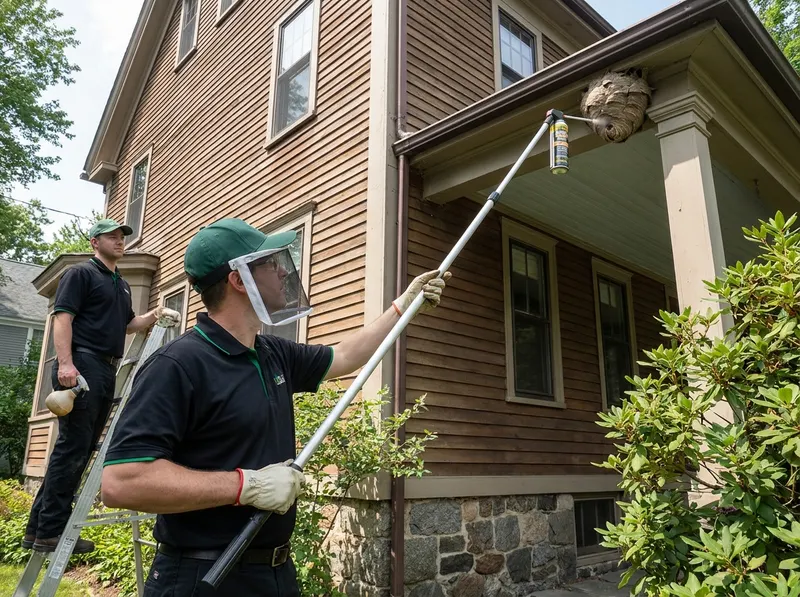
Stinging insect removal addresses structural and health hazards across residential and commercial buildings throughout Hartford County. High-risk nesting sites frequently emerge in mature wooden architectural features, soffits, and porch ceilings common to West End multi-story homes, Asylum Hill Victorians, and brick multi-family dwellings in Frog Hollow and Parkville. Aerial species like the baldfaced hornet construct enclosed cellulose nests reaching 14 to 24 inches in diameter, typically suspended from porch eaves or mature oak branches near Elizabeth Park Rose Garden and Bushnell Park. Subterranean yellowjackets colonize abandoned rodent burrows or cracked foundation margins in Barry Square, Behind the Rocks, and South End yards. In industrial sectors like North Meadows and Blue Hills, paper wasps construct open-cell comb structures inside metal vents, sheds, and commercial window flashings.
Over-the-counter pyrethroid spray cans offer an average spray trajectory of 15 to 20 feet, which often fails to penetrate the protective paper layers of mature nests. Incomplete spray applications trigger alarm pheromone releases, provoking defensive swarming that risks repeated stings to occupants, children, and indoor pets. In contrast, clinical Integrated Pest Management (IPM) protocols utilize localized insecticidal dusts and pressurized, botanical-derived compounds injected directly into the primary nest entrance. This method arrests the brood and queen without broadcasting indiscriminate chemicals across living areas. Single-visit targeted treatments eliminate the entire colony on the spot, dispensing with the need for standard 12-month auto-renewing extermination contracts.
If the insect structure is an exposed paper wasp comb on an exterior trim board, physical removal and localized barrier application resolves the issue in a single 45-minute window. If the colony involves yellowjackets nesting inside a structural wall void near Downtown Hartford brick facades or behind exterior siding, the protocol shifts to precision dusting through entry crevices rather than tearing out drywall. Physical nest extraction occurs immediately once worker activity halts, and entry voids are sealed to prevent new queens from establishing colonies the following spring.
Every job gets a firm, written price after a free on-site visit.
Tell us about your stinging insect & hornet removal job in Hartford and we'll send a clear, written quote, usually the same day.
 Brinova Pest Services