Bed bug thermal & precision extraction in Hartford applies controlled convective air currents to raise interior ambient temperatures to between 120 and 135 degrees Fahrenheit, an established thermal death point for…
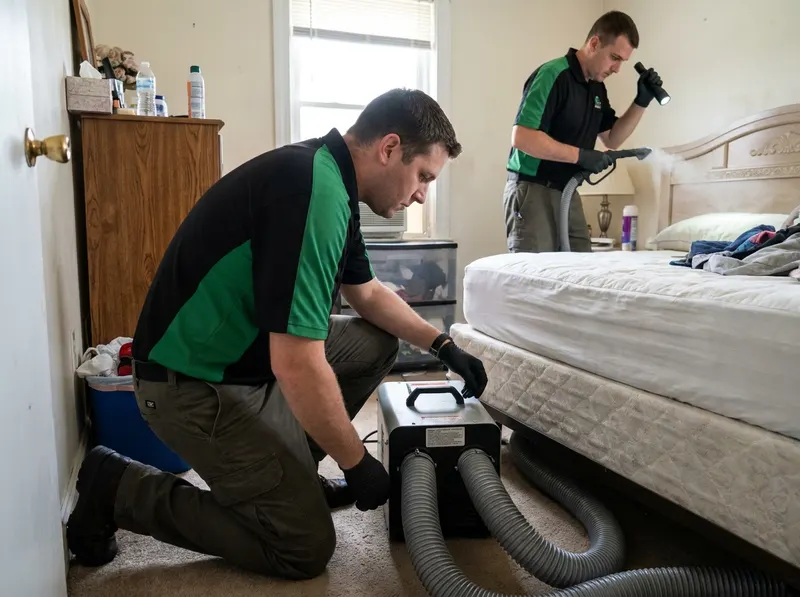
Bed bug thermal & precision extraction in Hartford applies controlled convective air currents to raise interior ambient temperatures to between 120 and 135 degrees Fahrenheit, an established thermal death point for Cimex lectularius eggs, nymphs, and adults. Simultaneously, physical HEPA-filtered vacuum extraction physically unseats active colonies from deep mattress tufts, headboards, baseboards, and heating registers. In multi-family Victorian houses in Asylum Hill and classic brick brownstones in Frog Hollow, older radiator pipes and lathe-and-plaster walls create complex connective voids where bugs escape standard over-the-counter surface aerosols. Thermal deployment penetrates past these surface barriers without saturating living spaces in persistent chemical residues, preserving indoor air quality for households with children and domestic pets.
Decision-fit considerations center on structure type and infestation scope. If an infestation is isolated to a single, uncluttered bedroom in a modern Downtown high-rise, targeted spot extraction and localized heat containment resolve the issue with minimal disruption. If the activity spreads across an expansive, wood-framed multi-family residence in Barry Square or the West End, whole-unit thermal elevation is required to ensure heat penetrates into structural framing, subflooring, and dense baseboards. The mechanical trade-off involves preparation time: thermal remediation requires removing heat-sensitive items such as candles, aerosol cans, fine oil paintings, and certain electronics prior to treatment, whereas liquid residual applications require less preliminary decluttering but often demand multiple repeat visits spanning several weeks.
Integrated Pest Management (IPM) protocols dictate that physical extraction precedes thermal elevation to lower insect biomass instantly. Technicians systematically treat mattress seams, box spring skirts, electrical outlets, and nearby molding before positioning electric heating units and industrial air movers. From Parkville apartments to historic residences near the Mark Twain House, structural materials dictate heat retention rates, requiring continuous temperature monitoring with infrared thermal sensors to eliminate cold spots where insects could seek refuge. A baseline inspection confirms the biological boundary of the infestation before equipment setup begins.
Every job gets a firm, written price after a free on-site visit.
Tell us about your bed bug thermal & precision extraction job in Hartford and we'll send a clear, written quote, usually the same day.
 Brinova Pest Services