Securing a dependable pest control service in Hartford resolves active structural and sanitation risks without requiring binding twelve-month service agreements. Connecticut homeowners near regional transit hubs and aging brick multifamily corridors often encounter persistent rodent and insect migrations driven by seasonal river valley temperature drops.

A professional pest control service in Hartford is a specialized property defense solution that identifies biological vectors, executes targeted physical exclusion, and eliminates active insect or rodent colonies across local residences.
Every service reflects the same meticulous attention to detail, whether it's a single job or a larger pest control sevice project across Hartford.
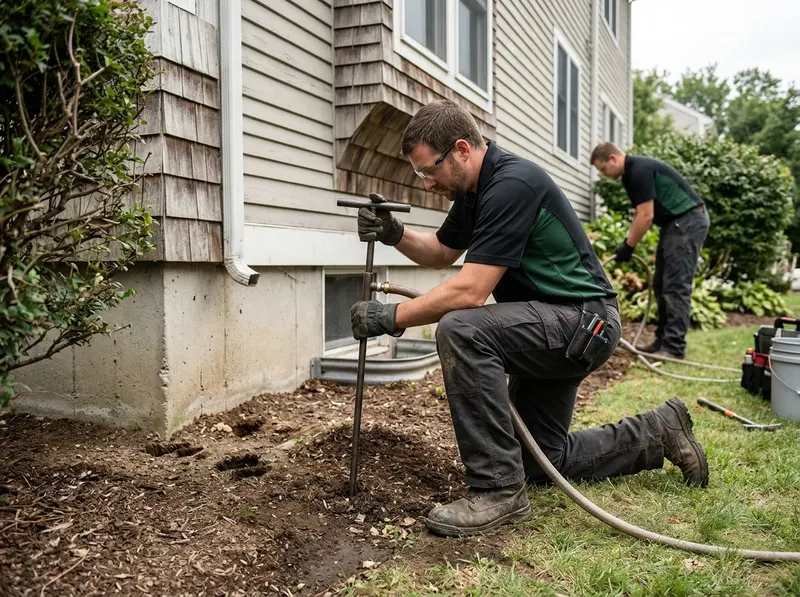
Subterranean termite colonies (Reticulitermes flavipes) access Hartford framing timbers through hidden mud shelter tubes spanning concrete footings, brick mortar joints, and historic rubblestone masonry foundations. Remediation combines targeted perimeter soil trenching, foundational sub-slab pressure injections, and exterior low-profile monitoring stations to neutralize worker castes, break reproductive colony cycles, and safeguard load-bearing wooden sills. Timbers are physically sounded with diagnostic steel-tipped probes to measure structural integrity, and moisture meters quantify perimeter sill dampness. Treatment scopes are confirmed via on-site timber probing, avoiding broad chemical off-gassing into interior living zones while establishing an impermeable chemical or bait barrier around the entire property envelope.
Get a quote →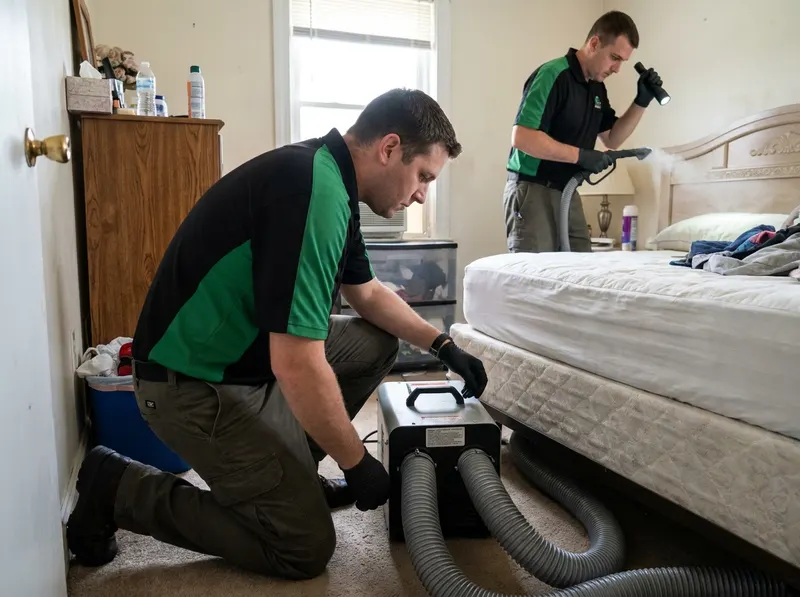
Bed bug infestations disrupt sleep and spread rapidly through baseboard micro-crevices, mattress piping seams, and multi-family electrical conduits behind wall switch plates. Clinical eradication combines localized forced-air heat applications exceeding 125 degrees Fahrenheit with target-specific amorphous silica desiccant dusts injected into wall voids and behind electrical outlet faceplates, restoring sanitary living conditions without requiring furniture disposal. Technicians deploy high-efficiency HEPA extraction vacuums directly onto harborages to instantly reduce living adult counts, nymph populations, and viable egg clusters. Follow-up diagnostic inspections utilize discrete floor interception traps to verify complete biological collapse across a mandatory 14-day observation window.
Get a quote →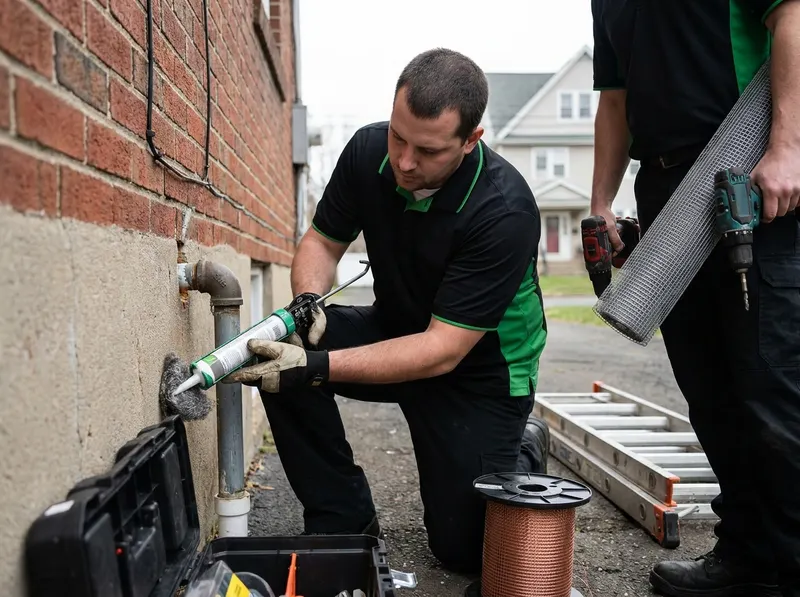
Urban rodents enter domestic and commercial properties through ground-level openings as small as one-quarter of an inch, particularly along aged stone foundations, cast-iron plumbing chases, and weathered exterior door thresholds. Service includes detailed exterior pathway mapping, comprehensive gnaw-proof copper wire mesh and elastomeric sealant exclusion, and mechanical interior snap-trapping runs to remove nesting animals without hazardous indoor chemical poisons or anticoagulant baits. Avoiding indoor poisons prevents deceased rodents from decaying behind enclosed drywall or under subflooring, which eliminates secondary odor and fly infestations. Exterior stations utilize locked, tamper-resistant perimeter hardware to intercept outdoor foraging populations safely away from companion animals.
Get a quote →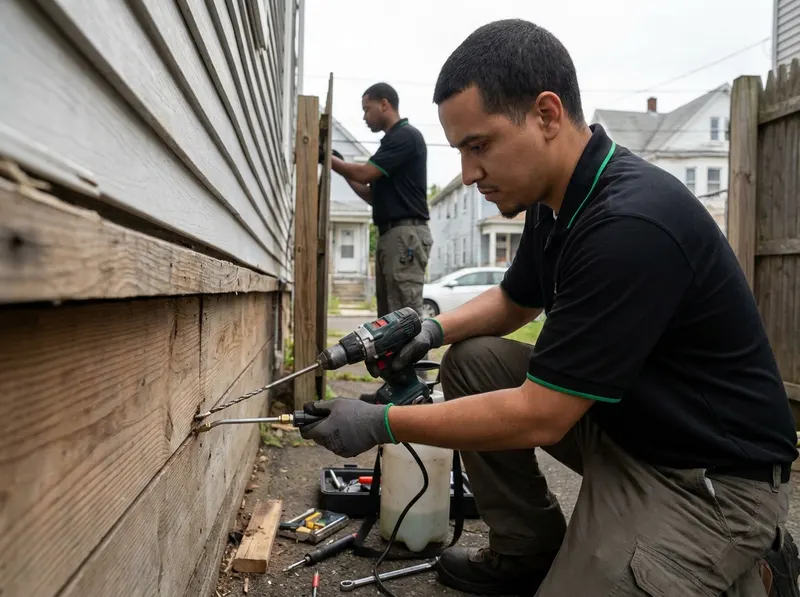
Carpenter ants (Camponotus pennsylvanicus) excavate extensive gallery networks within moisture-compromised structural wall studs, window headers, sill plates, and porch roof lines across shaded New England properties. Non-repellent systemic liquid transfers and localized timber void treatments target satellite colonies directly at the source, allowing foraging worker ants to carry biological actives back to the parent queen without detection, halting structural wood loss without widespread interior surface spraying. Technicians physically trace outdoor pheromone foraging trails along foundation perimeters, utility lines, and overhanging tree branches to locate primary exterior woodland nests, neutralizing outside reservoirs that replenish indoor satellite colonies.
Get a quote →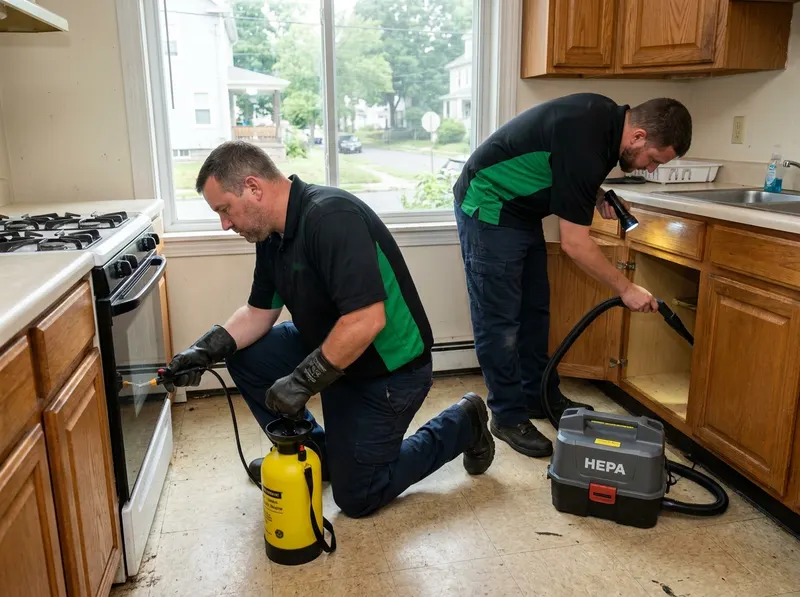
German cockroach infestations carry allergens and bacterial pathogens within kitchen cabinets, behind warm refrigeration motor coils, around dishwasher drainage pans, and along shared utility risers. Cleanout strategies deploy insect growth regulators (IGRs) to arrest nymphal development, precision micro-gel baiting matrices containing targeted active attractants, and HEPA-filtered vacuum extraction to collapse reproduction cycles safely in food preparation environments. Specialized non-volatile formulations eliminate airborne chemical drift, ensuring kitchen preparation counters, dishware, and food storage areas remain completely free of chemical residue during and after the cleanout process.
Get a quote →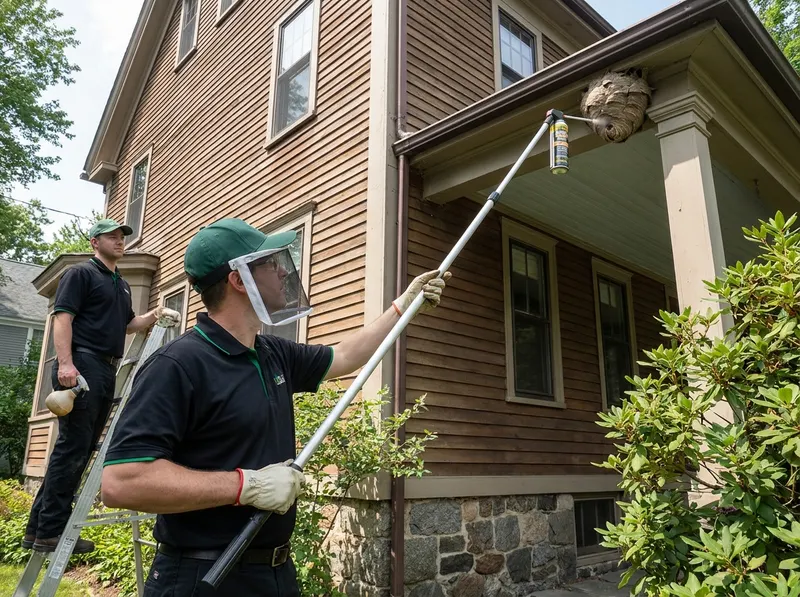
Yellowjackets, paper wasps, and bald-faced hornets construct defensive aerial and subterranean nests under exterior roof soffits, inside exterior structural wall cavities, beneath wooden deck boards, and across outdoor eaves. Direct aerosolized knockdowns and physical nest extractions neutralize stinging hazards to protect family members, companion pets, and outdoor maintenance workers. When nests are located deep inside residential structural voids, specialized non-repellent dust treatments eliminate the colony internally without driving agitated defensive wasps through interior lighting fixtures or drywall seams into interior living spaces. Exterior exclusion points are sealed post-removal to prevent prospective queens from recolonizing identical structural corners.
Get a quote →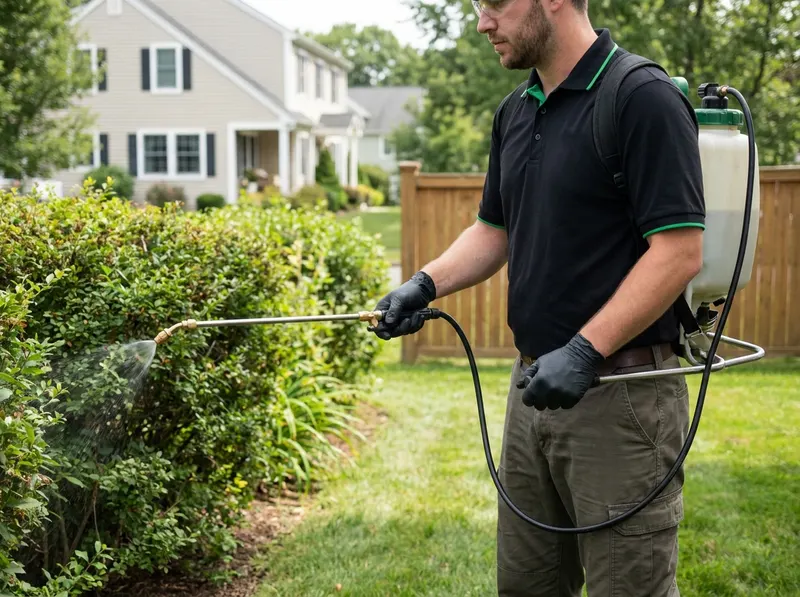
Vegetated property borders harbor blacklegged deer ticks (Ixodes scapularis) and biting mosquitoes capable of transmitting vector-borne illnesses from early spring through late autumn. Micro-encapsulated perimeter misting along shaded brush lines, low ornamental ground foliage, leaf litter zones, and damp property margins suppresses outdoor host populations while protecting family gathering zones. Technicians employ calibrated gas-powered backpack misters that place microscopic droplet barriers onto the undersides of leaves where adult mosquitoes rest during daylight hours, while granular perimeter applications create impassable desiccating borders against migratory nymphal ticks emerging from surrounding woodlands.
Get a quote →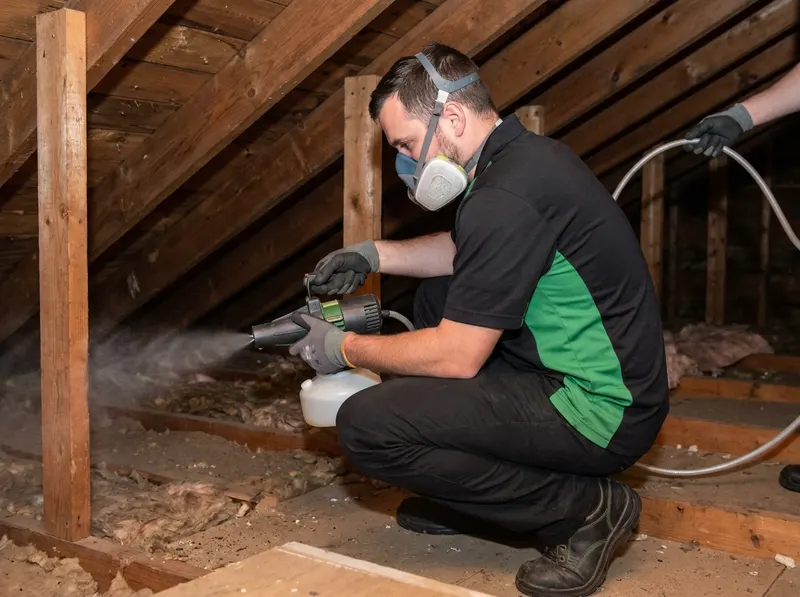
Unchecked wildlife, bat, and rodent nesting leaves toxic biological urine stains, chewed electrical wire insulation, pheromone scent trails, and compressed thermal insulation batting. Technical restorative cleanouts clear contaminated materials, sanitize exposed joists using specialized broad-spectrum EPA-registered virucides and enzymatic deodorizers, and prepare voids for clean, pest-resistant thermal barriers. The sanitization process neutralizes dangerous airborne bio-contaminants including Histoplasma capsulatum spores and leptospirosis bacteria, sealing structural wood pores against lingering animal odors that continuously attract secondary pests to the attic envelope.
Get a quote →You get a firm, itemized quote for your pest control sevice before any work begins, no surprises, no pressure.
Careful prep, tidy work, and a full cleanup when we are done. We treat your home and belongings like our own.
The same trusted, background-checked team from the first call to the final check.
Selecting appropriate biological intervention requires balancing acute eradication against ongoing environmental exposure. If your property displays localized, single-season invaders such as pavement ants or nesting bald-faced hornets, choose targeted single-visit spot elimination; this limits chemical footprints around children and domestic animals while resolving the immediate nuisance. If your building exhibits active wood-destroying subterranean termites or established structural carpenter ant galleries inside load-bearing timbers, select precision deep-barrier liquid injections or non-invasive exterior bait matrices; these methods halt structural deterioration at the foundation line without off-gassing into interior bedrooms.
If multi-family residential units or aging historic rowhomes face systemic indoor Norway rat or house mouse pressures, choose comprehensive structural exclusion paired with interior mechanical trapping rather than open anticoagulant baits; physical exclusion stops re-entry along utility conduits permanently, whereas poison baits risk target expiration inside inaccessible wall voids. The operational trade-off across these selections centers on upfront physical exclusion work versus ongoing chemical suppression: physical sealing requires higher initial exterior labor along brick mortar and sill plates but prevents recurring chemical dependency. For flying outdoor vectors like mosquitoes or disease-bearing blacklegged ticks, localized barrier treatments on perimeter foliage provide 21 to 30 days of active suppression; the trade-off is seasonal repetition versus single-application permanence.
When assessing wood-destroying beetles in historic sub-framing versus subterranean termites, precision direct timber injection protects load-bearing timbers without trenching landscape perimeters, whereas subterranean termite defense mandates continuous trench and soil treatment to isolate soil moisture access. For rental property portfolios or historic multi-unit residences where tenant turnover increases biological cross-contamination risks, choosing localized thermal isolation paired with mechanical insect growth regulators ensures eradication without forcing comprehensive structural fumigation or wholesale tenant displacement. Property managers balancing acute insect cleanouts against continuous exterior pest pressures should note that interior-only baiting fails when perimeter building envelopes harbor open mortar joints, unsealed copper water line entries, or unscreened basement hopper windows.
Every project gets a firm, written price after a free on-site visit. Ranges below for orientation.
Tell us about your pest control sevice job and we'll send a clear, written quote, usually the same day. Or just call and talk to a real Hartford pro.
(959) 248-4262
Properties throughout Hartford contend with diverse structural vulnerabilities, ranging from 19th-century Victorian framing in the West End and Asylum Hill to high-density multifamily brick brownstones in Frog Hollow and Barry Square. Proximity to the Connecticut River basin and parkland watercourses creates damp perimeter microclimates that accelerate carpenter ant wood rot and subterranean termite pressure. During autumn, falling temperatures drive field mice and Norway rats from commercial rail corridors and storm drainage networks toward warm basement stone foundations, necessitating tight physical exclusion over open-ended chemical reliance. In historic districts along Farmington Avenue and Prospect Avenue, historic fieldstone foundations and porous mortar assemblies require precise physical exclusion using stainless-steel mesh rather than invasive drilling. Shaded residential plots flanking Elizabeth Park Rose Garden, Keney Park, and Colt Park experience dense canopy cover that preserves soil dampness, fostering elevated populations of blacklegged deer ticks and moisture-dependent wood-boring insects. In older rental properties near Park Street and Capitol Avenue, shared utility raceways and legacy central boiler heating lines facilitate the vertical migration of German cockroaches and bed bugs between structural floors, demanding synchronized multi-unit baiting protocols rather than isolated single-room chemical treatments. Riverfront humidity along the Interstate 91 corridor and North Meadows marshlands consistently elongates the active subterranean termite swarming window well into late spring, while high groundwater tables in low-lying residential sectors adjacent to South Meadows necessitate exterior monitoring stations placed above seasonal flood lines to ensure continuous structural perimeter integrity.
Free estimates for Hartford & the surrounding area.
 Brinova Pest Services